
How ImageTrend Helped Yuma Fire Cut Monthly Scheduling From a Full Day to Two Hours
PR Newswire
EAGAN, Minn., Nov. 17, 2026
EAGAN, Minn., Nov. 17, 2026 /PRNewswire/ — Yuma Fire Department serves its southern Arizona community from seven stations and responds to nearly 20,000 calls annually. Approximately 140 field personnel staff seven engine companies, one ladder company, five full-time ambulances and a seasonal ambulance. The department uses ImageTrend Slate to help manage its complex scheduling and overtime processes.
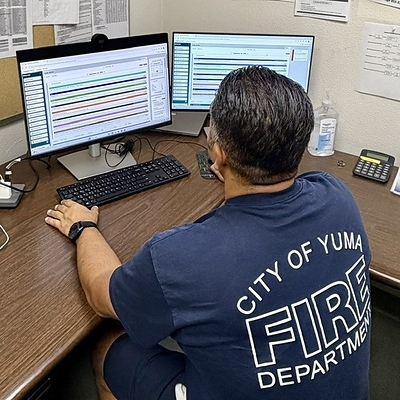
Managing schedules for that workforce had become increasingly complex. Daily schedules were built in Word, seniority and rotational overtime lists were maintained in Excel, and leave information had to be checked across separate calendars. When vacancies opened, captains contacted personnel or used the department’s CAD paging system, recorded responses and determined who should receive each shift.
Building a monthly schedule could consume a full workday or longer. Filling overtime was even more unpredictable. A scheduler might need to fill 15 or 20 vacancies across the next three days while accounting for requirements such as rank and paramedic status. On difficult days, that process could keep the overtime captain at the desk into the evening.
The department needed a more efficient way to identify qualified personnel for each opening without requiring schedulers to manually interpret multiple staffing and overtime rules.
From Multiple Tools to One Scheduling Process
Yuma Fire Department evaluated several scheduling platforms, looking for one that could reduce manual work while accommodating its staffing, qualification and overtime requirements. The department ultimately selected ImageTrend Slate, a scheduling solution for EMS and fire departments.
A key consideration was how the technology determined who qualified for a vacancy. One platform the department evaluated searched for someone with the same rank and every certification held by the person leaving a shift, even when the vacancy required only a paramedic. That could exclude otherwise eligible personnel while still requiring schedulers to manually cross-check results.
With Slate, Yuma Fire Department configured fill rules around what each vacancy actually required and the overtime hours personnel had already worked. One process replaced separate rotational lists for individual crews, helping schedulers identify eligible personnel and apply overtime criteria consistently.
The system also brought schedules, overtime bids, leave requests, shift trades and announcements together. Personnel could review opportunities and respond from their phones, while schedulers could select a fill rule and have Slate apply the department’s established criteria.
Building Scheduling Rules Around the Actual Vacancy
For Kris Leon, captain with Yuma Fire Department, one lesson from the transition is that agencies need to understand their own staffing processes before choosing technology.
“You have to have somebody who knows what they need in the software before you start shopping for it,” Leon said.
That means understanding what a scheduling system needs to determine when an employee leaves a shift, how qualified replacements should be identified and ranked, and whether the technology removes manual interpretation rather than simply moving it elsewhere.
It can also mean reconsidering processes that developed around older systems. “You have to be willing to change your workflow, ideally for the better,” Leon said. “Otherwise, you’re wasting your time.”
From a Full Day to About Two Hours
After implementing Slate, Yuma Fire Department reduced the time required to build its monthly schedule from a full workday or longer to approximately two hours. Scheduling and overtime responsibilities that had previously been divided between separate captains can now be managed by one person per shift.
The change also affected how overtime opportunities are managed. Previously, overtime was generally filled for the next three days, giving personnel relatively little time to plan. Opportunities can now open approximately one week in advance. Leon also observed personnel who rarely worked overtime beginning to bid on opportunities.
The scheduling process has become easier to transfer between personnel as well. Where the previous process depended heavily on accumulated knowledge, Leon estimates that a new captain can learn the current scheduling process in a two- to three-hour block.
“Slate made scheduling a turnkey operation,” Leon said. “Our department’s rules are built into the system, so anybody can use it.”
Continuing to Simplify Scheduling
Yuma Fire Department continues to refine how it uses Slate. Leon plans to automate more of the daily overtime notification process and explore using Slate for vacation bidding, another workflow that has historically involved phone calls and spreadsheets.
For Yuma Fire Department, those next steps provide additional opportunities to bring scheduling work into a more consistent and repeatable process.
Read the full Yuma Fire Department case study to learn more about the department’s implementation of ImageTrend Slate.

 View original content to download multimedia:https://www.prnewswire.com/news-releases/how-imagetrend-helped-yuma-fire-cut-monthly-scheduling-from-a-full-day-to-two-hours-302938589.html
SOURCE ImageTrend LLC


