
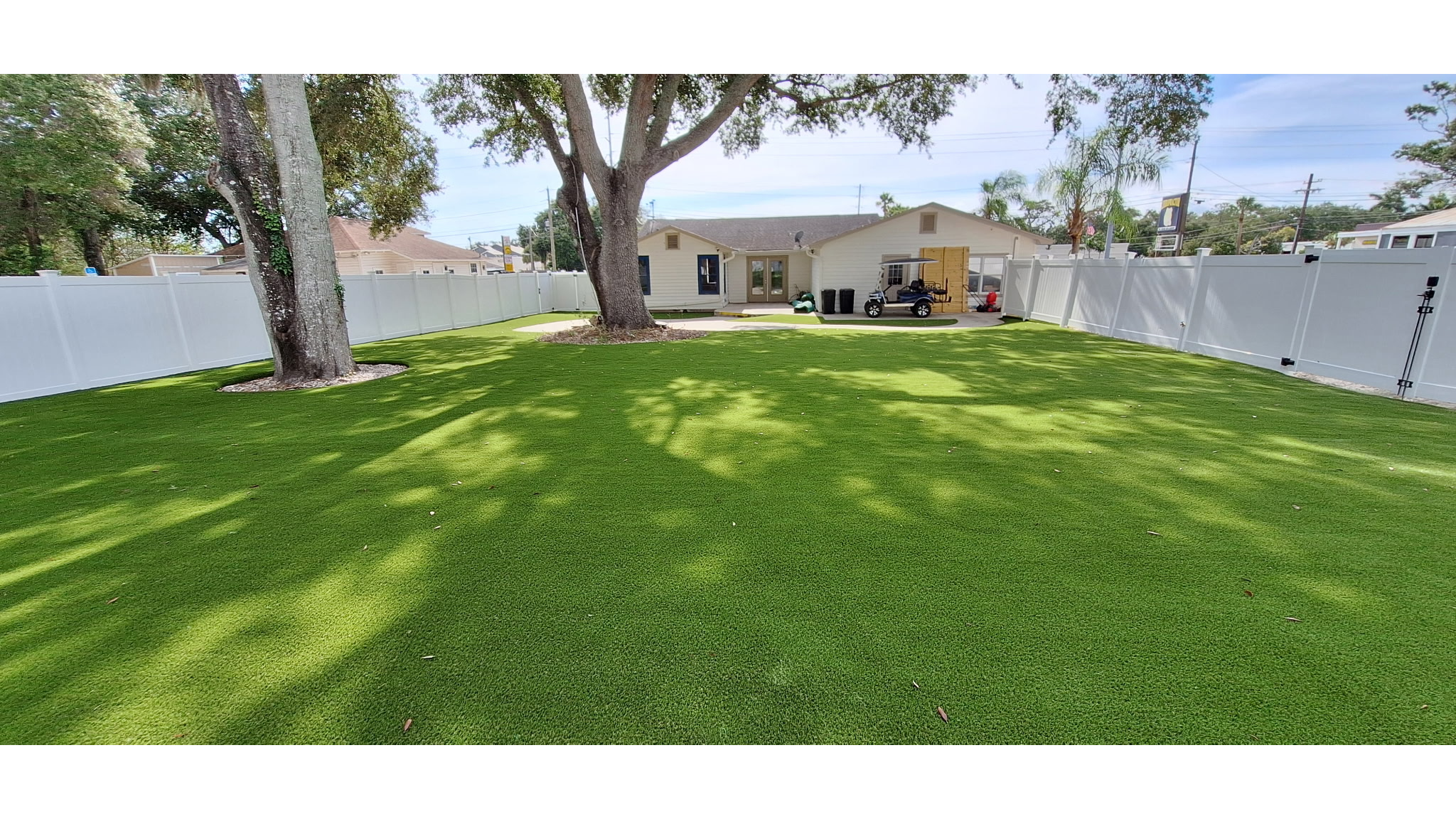
Artificial Turf Drainage in Tampa: What to Know About Heavy Rain & Flooding
Florida’s summer thunderstorms can turn an ordinary backyard into a muddy, waterlogged mess. For Tampa homeowners considering artificial grass, one of the most important questions is whether synthetic turf can handle heavy rainfall without developing puddles or drainage problems.
Artificial grass can drain rainwater effectively when a permeable turf backing, properly constructed base, and suitable drainage pathways work together. However, even premium synthetic grass cannot independently correct flooding caused by saturated soil, improper grading, or inadequate stormwater infrastructure.
At SYNLawn Tampa, we help homeowners understand what makes an artificial grass drainage system effective, from selecting high-performance turf products to evaluating the conditions beneath the finished lawn.
This guide explains how artificial turf drainage works, what causes standing water, how SuperDrain+™ technology differs from conventional turf backing, and what Tampa Bay homeowners should consider before installation.
Key Takeaways
- Artificial turf can drain during heavy rain, but performance depends on the entire installation system.
- Turf backing matters. High-permeability backing allows water to pass through the artificial grass surface.
- Base preparation is essential. Aggregate materials, soil conditions, grading, and drainage outlets determine where water travels.
- SuperDrain+™ technology has demonstrated drainage rates of up to 1,200 inches per hour under specified laboratory testing conditions on applicable SYNLawn products.
- Artificial grass cannot independently prevent flooding. Existing stormwater problems may require additional drainage improvements.
- Professional installation planning helps identify potential drainage restrictions before synthetic turf is installed.
Does Artificial Grass Drain Water?
Yes. Artificial grass is designed to allow rainwater to pass through its backing into the underlying installation base.
From there, water must either infiltrate into suitable soil or travel toward an appropriate drainage outlet.
Unlike natural grass, synthetic turf does not require living roots or irrigation to maintain its green appearance. However, water still needs a suitable path through the landscape.
A complete artificial turf drainage system involves four important components:
Turf backing: Allows water to pass through the artificial grass
Installation base: Supports the turf while accommodating water movement
Underlying soil: Influences how readily water can infiltrate into the ground
Grading and outlets: Direct excess water toward appropriate drainage destinations
When one component restricts water movement, moisture may accumulate at or beneath the surface.
For homeowners in Tampa, St. Petersburg, Clearwater, Brandon, and surrounding communities, evaluating these conditions is an important part of planning a successful artificial grass installation.
Why Artificial Turf Drainage Matters in Tampa, Florida
Tampa Bay’s rainy season creates challenges for both natural and artificial lawns.
According to the National Weather Service Tampa Bay Area, the rainy season for most of West Central Florida generally extends from May 25 through October 10.
During this period, frequent thunderstorms can deliver substantial rainfall in relatively short periods, increasing the likelihood of saturated soil, standing water, and localized drainage problems.
Natural lawns may develop muddy patches, erosion, and worn areas when exposed to repeated rainfall and heavy use.
Artificial turf can help eliminate exposed, muddy natural-grass surfaces while providing a consistently green landscape that does not require mowing or routine lawn irrigation.
However, the ability of an artificial lawn to manage rainfall depends on how the turf and underlying landscape are designed.
That’s why SYNLawn Tampa recommends evaluating existing drainage conditions before installation, especially when a property already experiences recurring puddles or flooding.
Standard Artificial Turf vs. High-Drainage Turf: What’s the Difference?
Not all synthetic turf products allow water to pass through their backing at the same rate.
Two artificial grass products may look nearly identical from above while featuring different backing designs and drainage characteristics.
Conventional Artificial Turf With Perforated Backing
Many standard artificial grass products use backing materials containing regularly spaced drainage holes.
Rainwater travels between the turf fibers and passes through these openings into the prepared base.
This approach can perform effectively when the backing’s permeability is suitable for the application and the installation beneath it accommodates water movement.
However, drainage performance can be influenced by the number, size, and placement of the openings. Accumulated debris or other materials may also interfere with water movement over time.
Advanced Artificial Turf With High-Permeability Backing
Some premium synthetic turf systems use more extensively permeable backing designs that allow water to pass through a greater portion of the surface.
These products can be especially useful for applications exposed to frequent rainfall, pet use, or routine cleaning.
SYNLawn offers proprietary SuperDrain+™ technology in applicable EnviroLoc+™ backing systems.
According to SYNLawn’s published product information, SuperDrain+™ has demonstrated drainage rates of up to 1,200 inches per hour under specified laboratory testing conditions.
This rating measures the tested permeability of the turf backing, not the drainage capacity of an entire installed lawn.
The distinction matters because the underlying soil, base materials, and drainage outlets must still accommodate the water passing through the artificial grass.
For more information about product construction, explore SYNLawn Tampa’s artificial turf buyer’s guide covering SuperDrain+™ and EnviroLoc+™ technologies.
What Makes SYNLawn SuperDrain+™ Technology Different?
SYNLawn SuperDrain+™ is engineered to provide high water permeability through qualifying artificial turf backing systems.
Rather than relying exclusively on widely spaced perforations, applicable SuperDrain+™ systems allow water to move through a more extensively permeable backing structure.
This helps reduce a potential drainage restriction at the turf surface.
SuperDrain+™ and EnviroLoc+™ Backing
SYNLawn’s EnviroLoc+™ backing technology incorporates plant-based materials and is engineered to securely anchor artificial grass fibers.
On applicable products, SuperDrain+™ provides enhanced permeability while EnviroLoc+™ contributes to the backing’s overall construction.
These technologies offer homeowners an advanced artificial turf option when evaluating long-term durability, product construction, and drainage characteristics.
Where High-Drainage Artificial Grass Is Most Useful
High-permeability turf can be particularly beneficial for:
- Residential lawns exposed to frequent thunderstorms
- Backyard dog runs requiring regular rinsing
- Poolside landscaping and outdoor entertaining areas
- High-traffic gathering spaces
- Areas where reducing muddy conditions is a priority
For pet owners, drainage also affects everyday cleaning and odor management.
Learn more in our complete guide to choosing the best artificial grass for dogs in Tampa, including how turf backing, infill, and maintenance influence pet-friendly landscaping.
Why the Base Beneath Artificial Grass Matters
A highly permeable turf product is only one part of a properly designed installation.
The foundation beneath the grass influences surface stability, water movement, and the finished landscape’s long-term performance.
1. Excavation and Site Preparation
Artificial grass installation generally begins with removing existing vegetation and unsuitable materials.
The amount of excavation required depends on the property’s elevation, soil conditions, intended application, and selected base design.
Before installation, an experienced contractor should identify existing low spots, runoff patterns, and areas where water accumulates.
2. Selecting Appropriate Base Materials
Artificial turf is commonly installed over a prepared aggregate base that provides structural support and accommodates drainage.
However, not all aggregate materials have the same permeability.
Materials containing excessive fine particles or installed in a manner that restricts water movement can limit drainage.
The base must be selected and compacted appropriately for the intended installation rather than assuming that every gravel or aggregate mixture performs identically.
3. Evaluating Tampa Bay Soil Conditions
Soil characteristics can vary considerably between properties, even within the same neighborhood.
Some soils allow water to infiltrate relatively quickly, while others drain slowly or remain saturated after storms.
High groundwater levels may also limit how much water can enter the underlying soil.
For these reasons, there is no universal artificial turf base design that guarantees adequate drainage on every Tampa property.
4. Grading and Drainage Outlets
After water passes through the turf backing and installation base, it needs somewhere to go.
Depending on the site, drainage may involve soil infiltration, suitable grading, drainage pipes, catch basins, or other approved water-management systems.
Proper planning should also prevent runoff from being redirected toward foundations, patios, or neighboring properties.
For a closer look at how professional installers evaluate site conditions, read our Davis Islands artificial grass installation guide, which covers grading, base preparation, drainage pathways, and installation considerations.
How Drainage Requirements Affect Installation Costs
Properties requiring additional excavation, grading corrections, specialized base materials, or dedicated drainage infrastructure may have higher installation costs than straightforward lawn replacements.
A professional estimate should explain which preparation and drainage measures are included.
Our complete Tampa artificial grass installation cost guide provides additional information about how site preparation, drainage requirements, materials, and installation complexity influence pricing.
Why Is Water Pooling on Artificial Grass?
Standing water can develop for several reasons, and identifying the underlying cause is important before attempting repairs.
Restricted turf backing: Water remains at the surface even when surrounding areas drain
Blocked or unsuitable base materials: Water passes through the turf but drains slowly beneath it
Poor grading: Puddles repeatedly collect in the same low spots
Saturated soil or high groundwater: Water persists after prolonged rainfall
Blocked drainage outlet: Runoff accumulates despite an otherwise permeable surface
Base settlement: Depressions form and collect water
Persistent moisture may also contribute to unpleasant odors, unstable areas, or cleaning difficulties, particularly where pet waste and organic debris accumulate.
Does Artificial Turf Drain Better Than Natural Grass?
The answer depends on the condition of the natural lawn and the design of the artificial turf system.
Healthy natural grass growing in suitable soil can support rainfall infiltration. However, compacted soils, worn lawns, and poorly graded areas may develop muddy patches or persistent puddles.
Artificial turf with permeable backing and a properly constructed base can allow water to move through the surface efficiently.
Both surfaces ultimately depend on the soil and drainage conditions beneath them.
The best option depends on the property’s intended use, existing conditions, and the homeowner’s maintenance priorities.
How to Choose the Best Artificial Turf for Heavy Rain in Tampa
When comparing artificial grass products or installers, homeowners should evaluate more than appearance and initial price.
Before approving a project, ask these questions:
- What type of backing does the proposed artificial grass use?
- How was its drainage performance tested?
- Which base materials will be installed, and why are they appropriate?
- How will the installer evaluate existing soil and grading conditions?
- Where will rainwater travel after passing through the turf?
- Are additional drainage improvements necessary?
- What maintenance is recommended to keep the system functioning properly?
- Does the installation estimate clearly identify drainage-related work?
An experienced installer should be able to explain the proposed construction approach and identify drainage concerns that may require additional evaluation.
Choose Artificial Grass Designed for Tampa’s Rainy Climate
Heavy rainfall is part of life in Tampa Bay, but homeowners have options for creating attractive outdoor spaces that require less routine lawn maintenance.
SYNLawn Tampa offers premium artificial grass products for residential lawns, pet areas, poolside landscaping, playgrounds, commercial properties, and other specialty applications.
Select SYNLawn systems incorporate SuperDrain+™ and EnviroLoc+™ technologies, combining advanced backing construction with high water permeability.
Our artificial grass products are manufactured PFAS-free in the USA, with plant-based materials incorporated into applicable systems.
From product selection to professional installation planning, SYNLawn Tampa helps homeowners evaluate artificial turf solutions suited to their properties and intended uses.
Ready to replace a muddy lawn or explore artificial grass for your Tampa Bay property?
Contact SYNLawn Tampa today for a FREE consultation to discuss premium turf products, installation options, and drainage considerations for your outdoor space.
Frequently Asked Questions About Artificial Grass Drainage
Does artificial grass drain during heavy rain in Tampa?
Yes. Properly designed artificial grass systems can allow rainfall to pass through permeable turf backing into the prepared base. Actual drainage depends on the underlying soil, grading, and available outlets.
What is the best draining artificial turf?
Look for turf with documented backing permeability and an installation design suited to the property. SYNLawn SuperDrain+™ offers tested high-permeability backing technology on applicable products, but the complete drainage system determines installed performance.
Can artificial turf cause flooding?
An improperly designed installation may alter runoff patterns or contribute to pooling. Artificial turf should not be installed with the assumption that it will resolve existing flooding problems.
Does artificial grass need a drainage base in Florida?
Most ground-level installations require an appropriately prepared foundation. Base materials and drainage requirements vary according to soil conditions, intended use, and property design.
Why does my artificial grass smell after heavy rain?
Persistent moisture, accumulated organic debris, and pet waste residues can contribute to odors. Cleaning and inspection may help, but recurring moisture problems should be professionally evaluated.
Can SuperDrain+™ prevent standing water?
SuperDrain+™ helps water pass rapidly through applicable turf backing systems. It cannot independently prevent pooling caused by saturated soil, improper grading, or inadequate drainage outlets.
Is artificial grass suitable for a yard with poor drainage?
It may be suitable if existing drainage problems are properly evaluated and any necessary improvements are incorporated into the installation plan. Severe flooding may require a qualified drainage professional.
SYNLawn Tampa
ken.nyhus@synlawn.com
+1 813 257 7273
620 67th St Cir E
Bradenton
FL
34208
United States


