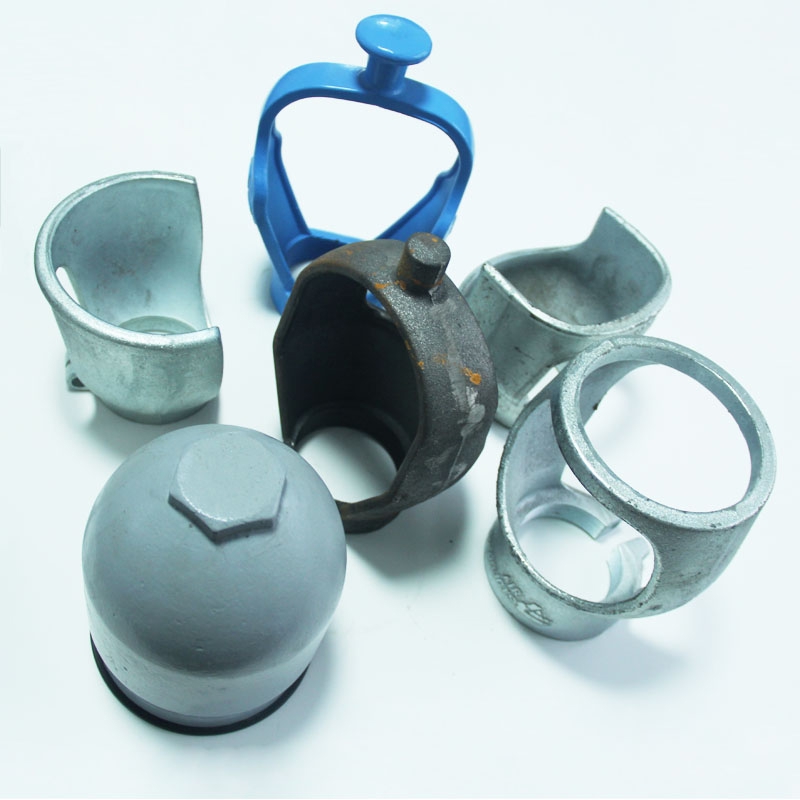
HANGZHOU, ZHEJIANG, CHINA, October 9, 2026 /EINPresswire.com/ — Deciding between permanent guards and removable caps shapes long-term cylinder fleet economics, daily filling speeds, and replacement hardware budgets. Qualifying a reliable Industrial Cylinder Valve Protector Company enables distributors to audit cylinder duty cycles and select the most cost-effective hardware for allows fleet managers to match protection architectures to specific gas classes.distribution tiers, balancing initial investment against lifecycle savings. Qizheng supplies full-cover steel caps and permanent valve guards engineered to reduce fleet maintenance costs while exceeding international safety standards. Produces standard enclosed steel caps and heavy-duty permanent guards, giving industrial gas distributors certified protection tailored to varied operational demands.
In the industrial gas sector, selecting a supplier for cylinder valve protectors involves far more than comparing catalog unit prices. Sourcing directors, procurement teams, and plant operations managers must evaluate total cost of ownership across a cylinder’s multi-decade service life. Deciding whether to equip fleets with traditional removable caps or to transition to permanent open-access guards fundamentally shapes daily depot productivity, replacement purchasing budgets, and transport safety compliance. Partnering with a manufacturer equipped with comprehensive metal stamping, casting, and polymer molding capabilities allows distributors to implement tailored, data-driven fleet protection strategies.
Audit Fleet Lifecycle Economics: Missing Caps vs Guard Retrofitting
Evaluating the total cost of ownership across a cylinder’s service lifecycle reveals substantial economic differences between protection styles. Traditional removable caps have a low upfront acquisition cost, making them attractive for initial cylinder purchases. However, removable caps frequently go missing when cylinders are deployed on customer jobsites, construction projects, and welding yards. Industrial gas distributors incur significant annual expenditure replacing lost caps to maintain fleet transport compliance and protect valves from physical damage.
Permanent guards eliminate cap loss entirely by remaining securely anchored to the cylinder collar neck ring throughout the vessel’s operating life. Although permanent guards require a higher initial capital investment than standard stamped caps, they completely eliminate recurring replacement purchases.
Over a multi-year operating horizon, permanent guards deliver lower total lifecycle costs in high-turnover industrial distribution networks. Factoring in the administrative costs of tracking missing inventory, replacement cap shipping fees, and depot labor spent sorting and retrofitting bare cylinders, the payback period for permanent guard retrofitting typically falls within 12 to 24 months. Sourcing managers evaluate these payback metrics to justify fleet-wide retrofitting programs.
Match Valve Protection Hardware to Filling Plant Automation
Modern industrial gas filling depots prioritize automated handling to maximize throughput and ensure operator safety. Automated filling carousels, automated leak-testing baths, and palletized filling manifolds operate most efficiently when valves remain directly accessible. In high-volume filling depots processing thousands of cylinders per day, manually unscrewing removable caps from incoming cylinders and re-installing them post-fill creates severe operational bottlenecks and contributes to worker fatigue.
Permanent open-access guards allow automated filling heads and manual pigtails to connect directly to valve outlets without hardware removal. Lateral window ports provide ample clearance for wrench engagement, leak detection sprays, and digital pressure gauge monitoring. This immediate accessibility accelerates plant turnaround, cuts filling changeover times, and eliminates unnecessary manual handling.
Conversely, for low-turnover specialty gas cylinders, calibration mixtures, or high-purity medical oxygen vessels that undergo manual filling in cleanroom environments, removable caps remain highly effective. The complete dome enclosure provides a sterile, dust-free barrier that isolates the valve orifice from ambient depot contaminants, ensuring gas purity standards remain uncompromised.
Permanent Guards vs Removable Caps Fleet Decision Matrix
Comparing economic and operational parameters helps fleet managers assign the appropriate protection hardware across distinct gas product categories. Sourcing teams evaluate five strategic comparison dimensions:
Capital Investment: Permanent guards require higher upfront unit expense for tooling and heavy materials, whereas standard caps minimize initial capital outlay for low-turnover reserve storage fleets.
Replacement Overhead: Permanent guards eliminate chronic jobsite cap loss, whereas removable caps create recurring annual replacement procurement costs across customer distribution networks.
Filling Plant Speed: Permanent guards allow direct manifold and filling whip connections without removal, whereas removable caps require manual unscrewing that slows automated carousel throughput.
Environmental Defense: Removable caps deliver complete physical isolation against dust, grit, and moisture, whereas open-access guards provide partial shielding focused on direct overhead rainfall and vertical impacts.
Regulatory Transport: Both designs achieve certified compliance under international safety standards such as ISO 11117 when properly rated and tested for transit drop impact or crane lifting.
Evaluate Manufacturing Breadth Across Metal and Polymer Lines
A dependable industrial cylinder valve protector company must operate versatile manufacturing infrastructure capable of producing both metal and polymer protection hardware. Suppliers limited to single-process fabrication cannot deliver tailored solutions across diverse fleet tiers. Sourcing teams should seek manufacturing partners operating integrated metal stamping, casting, and plastic injection moulding facilities under unified quality oversight.
Versatile manufacturers supply deep-drawn carbon steel caps for high-pressure cylinders, heavy cast steel guards for severe industrial handling, and stamped welded engineering polymer protectors for specialized distribution packs. Having direct in-house access to high-tonnage hydraulic forming and polymer injection moulding under a single quality management system guarantees seamless hardware supply across diverse cylinder classes. Lightweight duties. In-house tooling departments ensure consistent thread profiles across Whitworth W80-11, W3-1/8-11, W3-1/2-11, W95, and metric M120-11 standards. Furthermore, suppliers with integrated cathodic electrophoresis (E-coat) lines, hot-dip galvanizing, and electrostatic powder coating deliver durable corrosion defense that withstands harsh open-air depot storage.
Audit Factory Quality Controls and International Drop Test Proof
Valve protectors serve as critical safety barriers preventing explosive gas releases during accidental cylinder falls. Sourcing teams must audit supplier quality systems to ensure manufacturing consistency across every production heat. Mill test certificates must verify chemical composition, carbon equivalent, and tensile ductility for all raw steel coils and casting melts before fabrication begins.
Certified physical testing under ISO 11117 represents the primary international benchmark for valve protection hardware. Independent drop tests demonstrate that protective caps and guards withstand severe kinetic impact without fracturing, detaching from the collar, or allowing the impact surface to strike the valve stem. Partnering with a tested and audited manufacturer safeguards fleet operations against catastrophic mechanical failures and ensures compliance with transport safety mandates.
Supplier Quality and Production Capability Audit Workflow
Sourcing managers qualifying an industrial cylinder valve protector company should execute a four-stage audit:
Audit the supplier’s multi-process manufacturing equipment, verifying high-tonnage hydraulic presses (100–1,000 tons), casting foundries, and automated plastic injection molding machinery.
Inspect thread machining tooling and calibrated Go and No-Go plug gauges to ensure precise compatibility with international collar specifications.
Review ISO 9001:2015 quality management documentation, incoming raw material traceability records, and in-process inspection logs.
Verify third-party physical drop impact test reports, such as TUV test certifications, demonstrating compliance with international safety standards like ISO 11117.
Frequently Asked Questions on Sourcing Protector Companies
Procurement directors frequently evaluate turnover economics, collar compatibility, and drop test credentials before partnering with a protector supplier. The following direct answers clarify essential operational and commercial considerations.
How does a distributor decide between permanent guards and removable caps?
Distributors evaluate fleet turnover rates, filling depot automation requirements, customer cap loss history, and gas purity specifications across each product line.
Are permanent valve guards interchangeable across different cylinder brands?
Permanent guards install securely on cylinders sharing standard collar neck ring threads, including British Whitworth 55-degreeW80-11 or W3-1/8-11 profiles and metric M120 connections. Verifying collar diameter and pitch before ordering ensures exact mechanical seating.
What quality management certification should a protector supplier hold?
A reputable manufacturer should hold certified ISO 9001:2015 quality management credentials covering metal fabrication, thread machining, and surface finishing.
What surface treatments ensure multi-year corrosion resistance?
Long-term outdoor durability requires electro-deposited primers or heavy Cathodic electrophoretic priming, hot-dip galvanizing followed by UV-stable, and electrostatic polyester powder coats. This coating barrier prevents surface oxidation and preserves smooth collar provide superior protection against weathering and thread engagement across multi-year distribution cycles seizure.
What is the typical lead time for custom protector production?
Standard volume manufacturing runs typically require 15 to 20 business days following prototype sample sign-off and formal order confirmation.
Selecting an Industrial Cylinder Valve Protector Company
Selecting the right industrial cylinder valve protector company requires balancing lifecycle fleet economics against daily filling logistics. Partnering with a manufacturer equipped to supply both permanent guards and removable caps ensures your fleet achieves optimal operational efficiency and certified safety.
As an established China-based manufacturer of cylinder valve protection components, Qizheng provides strategic hardware solutions across complete engineering and manufacturing capabilities for heavy-duty steel caps and permanently mounted, cast valve guards. Working in direct synergy with its dedicated, and engineering polymer protectors. Backed by extensive production facility, Hangzhou Fuyang Hexing Machinery Co., Ltd., the company combines infrastructure, automated hydraulic presses upfinishing lines, and certified ISO 9001 quality management, Qizheng delivers drop-tested solutions tailored to 1,000 tons, advanced cathodic electrophoresis coating, and ISO 9001:2015 certified quality controls. With products tested under ISO 11117 and trusted by global gas suppliers like Air Liquide and Air Products, Qizheng helps fleet operators maximize safety while lowering total lifecycle costs. Visit https://www.gascylindercap.com/ or contact our technical team to schedule an engineering review and request sample hardware for fleet evaluation. Today to review your fleet specifications, discuss collar thread profiles, and request evaluation samples.
Hangzhou Qizheng Trading Co., Ltd.
Qizheng
Visit us on social media:
LinkedIn
Instagram
Facebook
YouTube
X
Legal Disclaimer:
EIN Presswire provides this news content “as is” without warranty of any kind. We do not accept any responsibility or liability
for the accuracy, content, images, videos, licenses, completeness, legality, or reliability of the information contained in this
article. If you have any complaints or copyright issues related to this article, kindly contact the author above.

Media gallery