
Originally Posted On: https://blog.tropicalmarine.com/boat-hoist-repair-tips-that-help-owners-spot-leaks-before-failure/
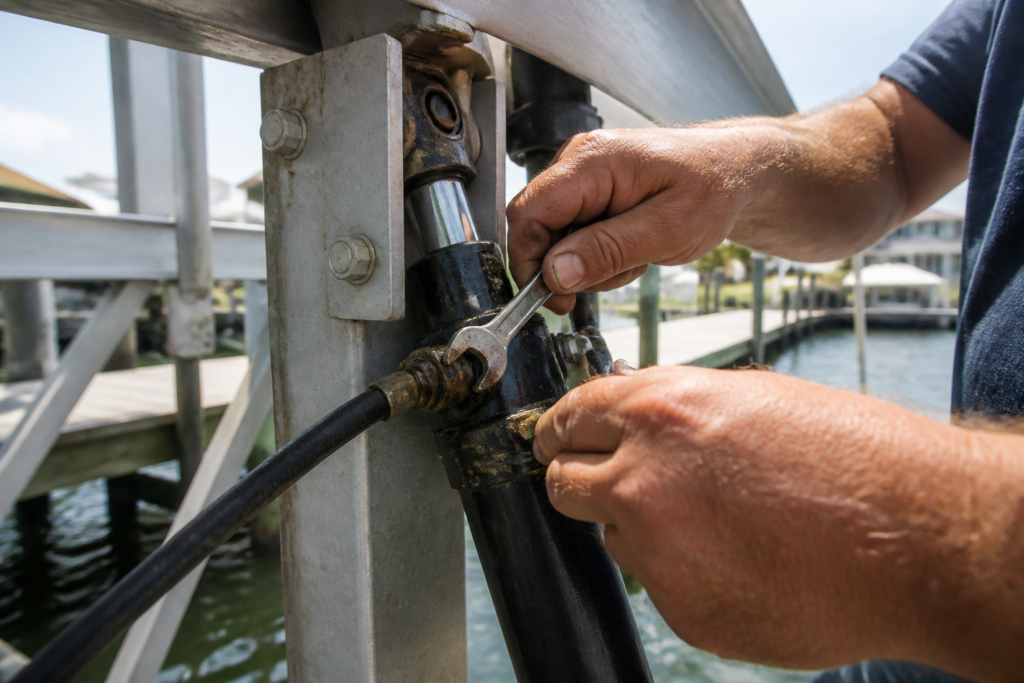
Key Takeaways
-
Watch for a slow drop between tides. That early boat hoist repair warning often points to a leak, weak valve, or worn seal before the lift quits.
-
Check cables, bunks, wheels, and hoses once a month. Good boat lift maintenance catches frayed lift parts, rubbing, and rust while the fix is still small.
-
Stop using the lift if it sits crooked or pulls unevenly. Boat lift repair near me calls usually start after owners ignore one side lifting harder than the other.
-
Call for hands-on service if the motor hums, the switch fails, or the lift won’t go down. Quick fixes around dock power can turn a repair job into a safety problem.
-
Ask for the right parts and brand match on HydroHoist, Deco, and older lifts. The wrong boat lift parts diagram, used parts, or guesswork can waste money fast.
-
Bring photos, lift size, boat type, and storm history when you request boat hoist repair near me. That makes it easier to price cables, motors, hoses, covers, and other repair work without delays.
Most boat lifts don’t fail all at once—they warn the owner first. A lift that settles an inch by morning, a tank that won’t hold air, a cable wheel that starts rubbing, a motor that hums but won’t move; those are early trouble signs, not minor quirks. In Southwest Florida, where salt air, king tides, summer storms, and heavy center console or pontoon use beat on docks year-round, putting off boat hoist repair is how a small leak turns into a crooked lift or a dropped boat.
Boat owners in Cape Coral and Fort Myers Beach usually spot the problem late. That’s the pattern. The bunk sits a little off—then more off. The paint flakes from metal parts, hoses crack, covers split, and the wear keeps moving back through the lift. And once dock power, switches, or older floating systems get mixed in, guesswork gets expensive fast. Realistically, the owners who catch leaks early spend less, wait less, and avoid the ugly repair bill that comes after a full breakdown.
Boat hoist repair signs SWFL owners should never ignore
At a Cape Coral dock just after a tide change, an owner comes back and finds the lift sitting 3 to 6 inches lower than it was at breakfast. That’s not normal—and it rarely fixes itself. Fast boat hoist repair keeps a small leak from turning into bent bunks, wet motors, or a boat rubbing the bottom paint off at one corner.
Slow lift drop between tides can point to an air or hydraulic leak
A slow drop usually means air is escaping, a hose is cracked, or a hydraulic seal is leaking. On HydroHoist-style lifts, it often starts at fittings, tanks, or old covers hiding weak parts. In practice, owners should check:
-
Lift height at morning and evening tide marks
-
Hoses and fittings for damp spots
-
Control console response and lag
Crooked bunks, uneven cable pull, and rubbing at the wheel often start small
If one side lifts slower, the bunks can go crooked fast—especially on pontoon and center console setups. A wheel that rubs, a cable that pulls unevenly, or carpet wearing back at one bunk usually means the lift needs service now. Small signs. Big bill later.
Rust, cracked hoses, worn covers, and frayed lift parts usually show up before a full breakdown
Rust at brackets, split hose jackets, torn covers, and frayed lift parts are early warnings, not cosmetic issues (that’s what most owners miss). For local marine repair planning, owners should log damage with photos, note tide timing, and stop using the lift if seats, accessories, or support hardware shift. Why wait for a full drop? Why risk the trailer-style bunks twisting under load?
Boat hoist repair near me: when to call for service instead of trying a quick fix
Quick fixes can make a bad lift worse. For waterfront owners in Cape Coral and Lee County, boat hoist repair near me should mean real diagnosis—not guesswork with a bad switch, wet motor, or failing control box.
A stuck lift, bad switch, or motor that hums but won’t move needs hands-on service
If the lift hums, trips a breaker, stops partway, or drops one side, the problem is usually in the motor, cable, gearbox, bunks, or electrical feed. In practice, a quick reset won’t fix worn parts or a short in the switch. That’s the moment for boat hoist repair.
-
Call for service if the motor runs but the wheel or drum doesn’t turn
-
If one cradle arm hangs back, the cable may be off track
-
Rust, frayed wire, or burnt contacts? Stop. Right there.
HydroHoist and other floating lifts need the right parts, diagrams, and brand-specific support
Floating lifts aren’t generic—far from it. HydroHoist models need the right parts, a correct diagram, and brand-specific support for pumps, tanks, valves, and accessories (especially on pontoon setups with custom covers or center console weight).
Owners looking for boat lift maintenance service usually need more than basic maintenance after leaks start, because the wrong parts or a bad repair can push water where air should be.
Why waterfront permits, dock safety, and electrical rules matter in Cape Coral and Lee County
Dock power near saltwater isn’t casual work.
A licensed marine contractor should check GFCI protection, disconnects, wiring height, and safe dock access—plus local permit rules if the repair turns into major service. Skip that, and a simple boat hoist repair can turn into a failed inspection.
Boat lift maintenance that helps stop leaks before they wreck the lift
Is the lift showing small warning signs before a costly boat lift repair call? In practice, that’s how most leak trouble starts—slow, quiet, easy to miss. Good boat hoist repair planning starts with basic checks done every month, not after the lift hangs up or drops back hard.
Monthly checks for cables, bunks, bottom contact, carpet wear, and bumpers
Start with the obvious. Then look closer.
-
Cables: check for frays, flat spots, rust streaks, or loose wraps on the drum.
-
Bunks: look for sag, loose bolts, wet carpet, and uneven seat marks under the hull.
-
Bottom contact: at low tide, make sure no beam or wheel assembly is striking mud or shell bottom.
-
Bumpers: cracked bumpers and torn covers let the boat shift—and that side load hurts lifts fast.
Saltwater trouble spots: pulleys, seat points, ladders, wraps, and paint loss on metal parts
Salt eats first where parts rub. Pulleys, ladder mounts, seat points, and cable wraps are common leak and wear zones (especially on older lifts near Fort Myers Beach). Paint loss on metal parts matters too—once bare steel shows, corrosion moves back under the coating.
What to log after storms, king tides, or heavy pontoon and center console use
After rough weather, log three things: water level, lift height, and any new lean. Add notes on heavy pontoon or center console use, because extra stern weight changes bunk pressure and cable load. Short notes help—date, tide, scrape mark, odd sound. That record makes boat hoist repair faster and stops guesswork.
Boat hoist repair cost, parts, and what owners should ask before approving work
About 6 out of 10 boat hoist repair calls in Southwest Florida start with a small leak or weak switch—not a total breakdown. That matters because early work is cheaper. In practice, owners who wait often turn a simple seal, hose, or cable issue into motor damage, tank trouble, or bent bunks.
What does boat hoist repair usually cost for cables, motors, switches, hoses, and tanks
Typical pricing varies fast—but there are rough numbers owners can use before they approve work. A boat hoist cable replacement job may run less than motor work, while a bad switch is often one of the cheaper fixes (if caught early).
-
Cables: often mid-range, based on size and lift parts access
-
Motors and switches: common service items on older lifts
-
Hoses and tanks: higher cost on hydrohoist-style systems
Boat lift parts near me versus used boat lift parts: what saves money and what backfires
Cheap parts can cost more.
Used pulleys, wheel parts, hoses, or switches may look fine from the outside—then fail under load. For safety items, new parts from a local source beat used stock from a catalog almost every time. That goes double for cables, tank fittings, and electrical service parts.
Accessories, custom bunks, covers, and add-on services that may affect the repair quote
Quotes change when owners add extras. Custom bunks, pontoon support changes, carpet, bumpers, ladder work, bottom paint touch-up near the lift, or covers for seats and console areas all add labor. Smart owners ask three things: what broke, what caused it, and what should be fixed now—before the lift is put back in service.
Boat lift repair near me: how to get a quote and keep the job moving fast
Fast quotes don’t start with a phone call.
They start with good details. For boat hoist repair, a crew can price labor, parts, and service much faster when the owner sends clear facts up front—not guesses.
What a repair crew needs from you: lift size, boat type, photos, and any past maintenance notes
Short list. Big difference. A repair crew should get:
-
Lift capacity like 10,000 or 16,000 pounds
-
Boat type: center console, pontoon, bass boat, or inflatable
-
Photos of motors, bunks, cables, wheel assemblies, covers, carpet wear, and the bottom frame
-
Past maintenance notes on switches, paint, wraps, bumpers, ladder access, and used parts
In practice, one clear photo of a cracked bracket or leaking tank can save a full trip—and days of back-and-forth. Owners needing boat lift motor repair should also send the motor brand, voltage, and any tripped breaker notes.
Good quote questions for Deco, HydroHoist, older lifts, and lifts with missing parts diagrams
Ask direct questions. Not fluffy ones. Good examples: 1) Is this a cable, motor, switch, or tank issue? 2) Are parts in stock for Deco or HydroHoist? 3) If the parts diagram is missing, can the crew match older lift parts from photos? 4) Will the quote include bunks, seat or console clearance, and setup changes after repair?
Where owners can check Florida dock and electrical rules before scheduling repair
Smart owners check local rules first—especially if dock power looks unsafe. Lee County permit pages, FWC dock safety pages, NFPA electrical code pages, and BoatUS storm-prep articles help flag permit, circuit, and insurance issues (before the service truck rolls).
Frequently Asked Questions
How much does it cost to fix a boat lift?
Most boat hoist repair jobs in Southwest Florida land somewhere between $250 and $2,500, depending on what broke. A bad switch, relay, wheel, cable adjustment, or minor lift parts swap is usually on the lower end, while motor damage, bunk repairs, bottom corrosion, or major structural work costs more. If the cradle is out of level or the lift has been run while jammed—common after storms—the bill climbs fast.
Why is my boat lift not going down?
The usual causes are a bad motor, a stuck contactor, a failed switch, a tripped breaker, a jammed cable drum, or bunks binding under load. On some setups, the lift isn’t the problem at all—the boat shifted back, carpeted bunks grabbed too hard, or a pontoon is hanging up on guides or bumpers. Don’t keep hitting the switch; that’s how a small service call turns into a burnt motor.
What is the lifespan of a boat lift?
A well-built lift in saltwater often lasts 15 to 25 years, but only if you stay on top of boat lift maintenance. Cables, pulleys, covers, switches, and other parts wear out much sooner, and in Cape Coral canals, that can mean every few years. In practice, the frame may still be sound while the working parts need regular repair.
Is my boat lift covered by homeowners’ insurance?
Sometimes, but don’t assume it is. Some policies cover a dock lift for named storm damage or impact, while wear, rust, lack of maintenance, and old age are usually excluded (that’s the part people hate hearing). Before you schedule major boat hoist repair, call your carrier and ask how they treat docks, lifts, accessories, and electrical service at the seawall.
How do I know if I need boat hoist repair or full replacement?
If the frame is solid and the trouble is in the motor, switch, cable, bunks, seat hardware on a PWC cradle, or other lift parts and accessories, repair usually makes sense. If the top beam is badly corroded, the pilings have moved, the structure is twisted, or the lift is undersized for the boat, replacement is the smarter call. Cheap repairs on a worn-out lift don’t save money—they delay a bigger bill.
Can you get boat lift parts near me, or do I need special-order parts?
Most common boat lift parts near me searches are really about cables, pulleys, switches, motors, guides, bunks, wheel kits, and covers, and many of those can be sourced quickly in Florida. Brand-specific items—like a control box, custom bracket, or odd part from an older HydroHoist setup—may need to be ordered. A good tech should know the parts diagram before showing up, not figure it out on your dock.
Do I need permits for boat hoist repair in Lee County or Cape Coral?
Minor service work, like replacing switches, cables, or worn accessories, often doesn’t need a new permit. Structural changes, pile work, electrical changes, or changing lift size can trigger permit rules—and that’s where homeowners get into trouble. If you’re not sure, ask a licensed marine contractor who works Lee County and Cape Coral jobs every week.
How often should a boat lift be serviced?
At least once a year. Twice a year is better for saltwater lifts on open canals or places that see hard use, especially if you keep a heavier center console, bass boat, or pontoon on the hoist full-time. Regular boat lift maintenance catches frayed cables, worn bunks, weak switches, bad grease points, and cracked covers before you need emergency boat lift repair near me.
Is it safe to use a boat lift if one side is lower than the other?
No. Stop using it.
A lift that’s out of level usually means cable stretch, drum issues, pulley wear, bent hardware, or a frame problem—and running it like that can drop the boat, twist the cradle, or damage the hull. I’ve seen owners try to “run it back even”—bad idea—and that often turns a simple boat hoist repair into a full rebuild.
Can older lifts still be repaired if parts are hard to find?
Usually, yes—but it depends on the brand, age, and what failed. Some older lifts can take used boat lift parts, custom-fabricated brackets, new bunks, fresh carpet, or updated electrical service, even if the original catalog parts are gone. If the lift needs too many one-off fixes, replacing it is often the cleaner move.
Most lift failures don’t come out of nowhere—they leave clues first. A boat that settles between tides, bunks that sit uneven, cables that pull out of line, or hoses and metal parts showing wear are early warnings, not small cosmetic issues. Catching those signs early is usually the difference between a repair visit and a bigger dockside mess.
Quick patch jobs also have a way of getting expensive—especially on older lifts, floating systems, or setups with electrical trouble. That’s where proper boat hoist repair matters. The right parts, the right brand match, and a crew that understands Lee County permit rules, dock safety, and waterfront power can keep a simple fix from turning into motor damage, tank trouble, or a failed inspection.
And that’s exactly why smart owners keep notes after storms, king tides, and heavy boat use (even a few phone photos help). If a lift is dropping, rubbing, humming, or leaning, the next move is simple: gather the lift size, boat type, and recent photos, then call Tropical Marine Construction at (239) 542-1004 or email service@tropicalmarine.com to schedule a repair review in Cape Coral, Fort Myers Beach, or nearby Lee County.
Tropical Marine Construction
1222 SE 47th St Suite C1, Cape Coral, FL 33904
(239) 542-1004
tropicalmarine.com
View Google Business Profile
Follow us: Instagram


