Precision oncology focuses on tailoring cancer treatment based on an individual’s genetic profile, tumor characteristics, and molecular biomarkers
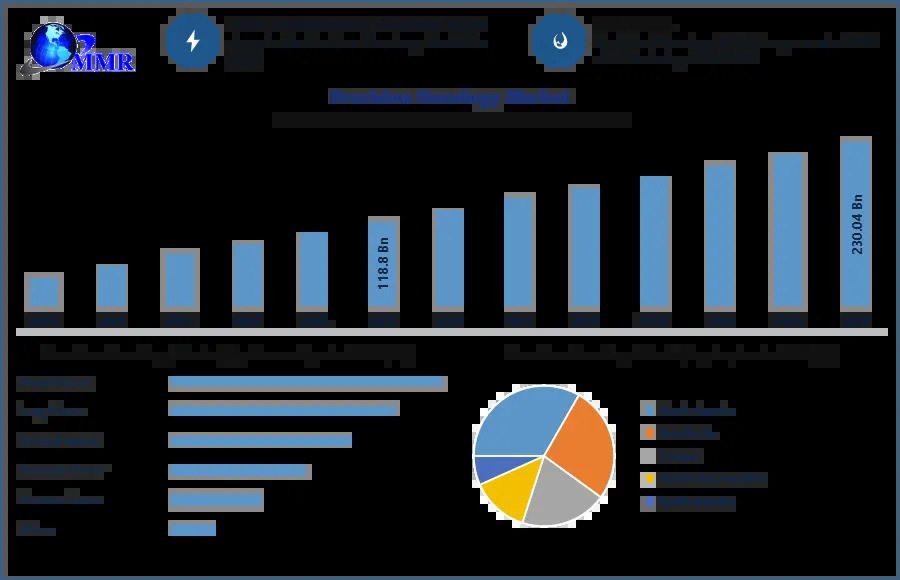
AUSTIN, TX, UNITED STATES, June 10, 2026 /EINPresswire.com/ — The Global Precision Oncology Market is witnessing remarkable growth as healthcare systems increasingly adopt personalized treatment approaches for cancer management. Valued at approximately USD 118.8 billion in 2025, the market is projected to expand at a compound annual growth rate (CAGR) of 9.9% during the forecast period, reaching an estimated USD 230.40 billion by 2032. This growth reflects the increasing demand for targeted therapies, genomic testing, biomarker-based diagnostics, and advanced treatment strategies designed to improve patient outcomes while minimizing adverse effects.
Precision oncology focuses on tailoring cancer treatment based on an individual’s genetic profile, tumor characteristics, and molecular biomarkers. Unlike traditional treatment methods, precision oncology enables clinicians to identify the most effective therapies for specific cancer types, leading to higher treatment success rates and reduced healthcare costs. The growing prevalence of cancer worldwide, coupled with advances in genomics and molecular diagnostics, continues to fuel market expansion.
Get a sample of the report: https://www.maximizemarketresearch.com/request-sample/188401/
Market Growth Drivers
One of the primary factors driving the precision oncology market is the rising global cancer burden. Increasing incidences of breast cancer, lung cancer, colorectal cancer, prostate cancer, and hematological malignancies have intensified the demand for more effective and personalized treatment options. Governments and healthcare organizations are investing heavily in cancer research programs aimed at improving early diagnosis and therapeutic outcomes.
Another significant growth driver is the rapid advancement of next-generation sequencing (NGS) technologies. These technologies enable comprehensive genomic profiling of tumors, helping clinicians identify actionable mutations and select targeted therapies. The declining cost of genome sequencing has further enhanced accessibility, encouraging broader adoption across hospitals, diagnostic laboratories, and research institutions.
The increasing availability of targeted therapies and immunotherapies is also contributing to market growth. Pharmaceutical companies are developing innovative drugs that specifically target genetic abnormalities associated with cancer progression. These therapies often demonstrate improved efficacy compared to conventional chemotherapy, making them increasingly preferred among healthcare providers and patients.
Furthermore, the integration of artificial intelligence (AI) and machine learning in oncology research is accelerating drug discovery, patient stratification, and treatment planning. AI-powered platforms can analyze vast datasets to identify novel biomarkers and predict treatment responses, enhancing precision medicine capabilities.
Recent Market Developments
Recent years have witnessed substantial developments in the precision oncology landscape. Leading biotechnology and pharmaceutical companies have expanded their genomic testing portfolios through strategic collaborations and acquisitions. Several organizations have launched advanced companion diagnostics to support personalized treatment decisions.
The approval of new targeted therapies for various cancer indications has significantly strengthened market growth. Regulatory agencies worldwide continue to support precision medicine initiatives by streamlining approval pathways for innovative oncology treatments. Additionally, the emergence of liquid biopsy technologies has transformed cancer diagnostics by enabling non-invasive detection of tumor-derived genetic material through blood samples.
Healthcare providers are increasingly incorporating molecular tumor boards and genomic profiling services into routine clinical practice. These developments are helping bridge the gap between genomic data generation and clinical decision-making, further promoting precision oncology adoption.
Market Segmentation
By Product Type
Diagnostics
Therapeutics
Companion Diagnostics
Genomic Testing Solutions
Biomarker Discovery Tools
Among these, diagnostics and genomic testing solutions account for a significant market share due to growing demand for accurate molecular profiling and early cancer detection.
By Technology
Next-Generation Sequencing (NGS)
Polymerase Chain Reaction (PCR)
Immunohistochemistry (IHC)
In Situ Hybridization (ISH)
Microarray Technology
NGS remains the dominant segment owing to its ability to provide comprehensive genomic insights with high accuracy and efficiency.
By Cancer Type
Breast Cancer
Lung Cancer
Colorectal Cancer
Prostate Cancer
Melanoma
Hematologic Cancers
Others
Lung and breast cancer segments continue to lead the market due to high disease prevalence and the availability of numerous targeted treatment options.
By End User
Hospitals
Diagnostic Laboratories
Research Institutes
Specialty Cancer Centers
Academic Institutions
Hospitals and cancer centers represent major end users as they increasingly integrate genomic testing into clinical workflows.
Get a sample of the report: https://www.maximizemarketresearch.com/request-sample/188401/
Emerging Trends
Several emerging trends are reshaping the future of the precision oncology market. One notable trend is the growing adoption of liquid biopsies. These minimally invasive tests provide real-time insights into tumor evolution and treatment response, offering significant advantages over conventional tissue biopsies.
Another key trend is the expansion of multi-omics approaches, which combine genomic, transcriptomic, proteomic, and metabolomic data to create a more comprehensive understanding of cancer biology. Multi-omics technologies are enabling the discovery of novel therapeutic targets and enhancing treatment personalization.
The rise of decentralized clinical trials is also transforming oncology research. Digital health platforms and remote patient monitoring tools are facilitating broader patient participation, accelerating drug development timelines and improving trial efficiency.
Additionally, cloud-based genomic data management systems are becoming increasingly important. These platforms enable secure storage, analysis, and sharing of large-scale genomic datasets, supporting collaborative research efforts and precision medicine initiatives worldwide.
Innovations Driving the Market
Innovation remains at the core of precision oncology advancements. CRISPR-based gene editing technologies are opening new possibilities for cancer research and targeted treatment development. Researchers are exploring gene-editing approaches to modify cancer-related genetic mutations and improve therapeutic effectiveness.
Artificial intelligence-driven predictive analytics is another major innovation area. AI algorithms are helping identify treatment-resistant tumors, predict patient outcomes, and optimize therapy selection. These capabilities are expected to enhance clinical decision-making and improve survival rates.
The development of personalized cancer vaccines represents a promising frontier in oncology. By leveraging patient-specific tumor mutations, these vaccines aim to stimulate targeted immune responses against cancer cells. Ongoing clinical trials continue to demonstrate encouraging results across multiple cancer types.
Get access to the full description of the report @ https://www.maximizemarketresearch.com/market-report/precision-oncology-market/188401/
Future Outlook
The future of the global precision oncology market appears highly promising as technological advancements continue to transform cancer diagnosis and treatment. Growing investments in genomic medicine, expanding applications of artificial intelligence, increasing availability of targeted therapies, and rising awareness of personalized healthcare are expected to drive sustained market growth.
As healthcare systems increasingly prioritize precision medicine, the precision oncology market is poised to play a critical role in the future of cancer care. With projected revenues reaching USD 230.40 billion by 2032, the industry is set to become one of the most dynamic and innovative segments within the global healthcare ecosystem
About Maximize Market Research:
Maximize Market Research is a multifaceted market research and consulting company with professionals from several industries. Some of the industries we cover include medical devices, pharmaceutical manufacturers, science and engineering, electronic components, industrial equipment, technology and communication, cars and automobiles, chemical products and substances, general merchandise, beverages, personal care, and automated systems. To mention a few, we provide market-verified industry estimations, technical trend analysis, crucial market research, strategic advice, competition analysis, production and demand analysis, and client impact studies.
Contact Maximize Market Research:
3rd Floor, Navale IT Park, Phase 2
Pune Banglore Highway, Narhe,
Pune, Maharashtra 411041, India
sales@maximizemarketresearch.com
+91 96071 95908, +91 9607365656
Thank you for reading the report. The report can be customized as per the requirements of the clients. For further information or query about customization, please reach out to us, and we will offer you the report best suited for your needs
Lumawant Godage
MAXIMIZE MARKET RESEARCH PVT. LTD.
+91 96073 65656
email us here
Visit us on social media:
LinkedIn
Instagram
Facebook
X
Legal Disclaimer:
EIN Presswire provides this news content “as is” without warranty of any kind. We do not accept any responsibility or liability
for the accuracy, content, images, videos, licenses, completeness, legality, or reliability of the information contained in this
article. If you have any complaints or copyright issues related to this article, kindly contact the author above.

Media gallery