Originally Posted On: https://anzzi.com/blogs/news/can-fluted-glass-shower-doors-add-privacy-without-making-small-baths-feel-closed
Key Takeaways
- Choose fluted glass shower doors when a client wants more privacy in a small bath without losing daylight; the vertical texture softens sightlines while keeping the shower enclosure visually open.
- Compare frameless fluted glass shower doors against framed or frosted options early, because slimmer hardware and cleaner sightlines usually make tight bathrooms feel less boxed in.
- Match the fluted glass shower door style to the layout—sliding for narrow clearances, hinged for wider entries, bifold for tight swing zones, and fixed panel screens for walk-in showers.
- Budget for texture and fabrication, since reeded or fluted glass shower doors usually cost more than standard clear glass once custom sizing, tempered glass thickness, and hardware finishes are added.
- Plan cleaning and detailing up front; fluted shower glass can hide fingerprints better than clear glass, but soap film in the grooves needs the right orientation, coating, and maintenance routine.
- Explain reeded vs fluted glass before approval, especially on custom shower doors, so clients understand the look, privacy level, and how the pattern will read against tile, acrylic walls, and metal hardware.
Small baths have a brutal tradeoff: privacy or openness. Designers have spent years choosing between clear shower glass that leaves clients feeling exposed, and frosted panels that can deaden a room fast. That’s why fluted glass shower doors keep showing up in current bath plans—they soften sightlines, catch light, and add just enough screening without turning the shower into a heavy box.
In practice, that balance is what sells them. A reeded or textured panel can blur the view from vanity to shower while still letting daylight move through the enclosure, which matters a lot in compact footprints and one-window bathrooms. And the look lands right where a lot of contemporary and transitional work is heading—clean, quieter, a little warmer than stark clear glass. But the honest answer isn’t as simple as “yes, they add privacy.” The door style, panel width, hardware, wall conditions, and even how the grooves face all change the result—sometimes more than people expect.
Why fluted glass shower doors are suddenly everywhere in small-bath planning
A designer swaps clear glass for a 42-inch bath remodel, steps back, and the room suddenly feels exposed. The client wants privacy, not a heavy-framed box. That’s where fluted glass shower doors have moved from niche pick to daily specification.
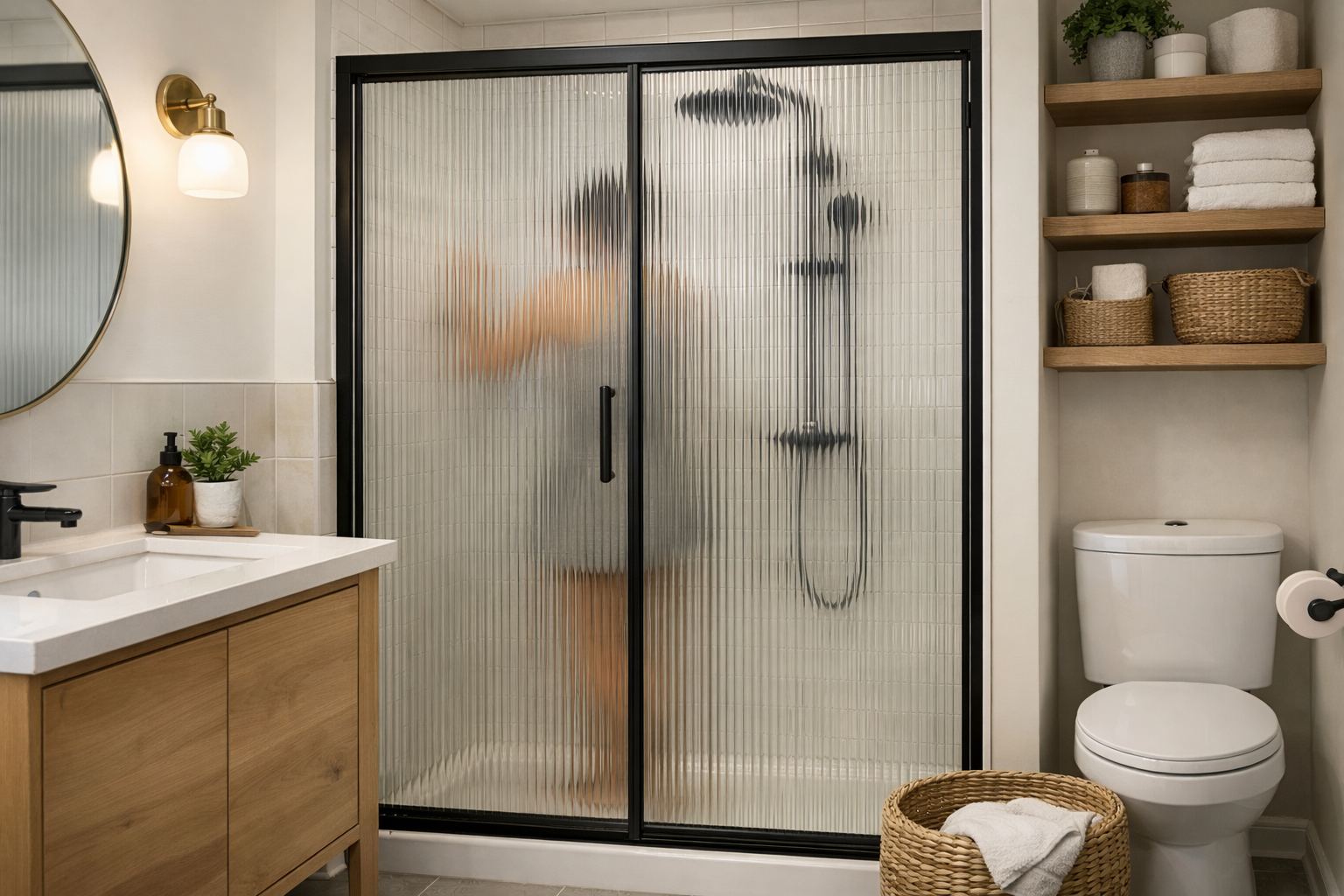
In practice, they soften sightlines without blocking light, which is exactly why small baths keep getting them. The vertical texture blurs the view, keeps the shower area lighter than frosting, and works with frameless, semi-framed, or slim sliding hardware.
The privacy problem designers keep running into with clear shower glass
Clear glass looks open, but it also puts every shampoo bottle, grout line, and body silhouette on display. Privacy glass shower doors fix that tension. So do decorative glass shower doors, especially where the client wants one bath to handle guests, kids, and daily use without feeling clinical.
For projects comparing options, ribbed glass shower doors are getting specified for the same reason: they give privacy while keeping the enclosure visually light.
Why fluted, reeded, and textured glass shower doors fit the current move toward softer contemporary bathrooms
Not all textured panels read the same.
Reeded glass shower doors usually have tighter, more defined grooves, while textured glass shower doors is the broader category. The Glass Association of North America sets the baseline for safety glazing in wet areas, and tempered, patterned panels meet the same basic safety expectations as clear ones.
Where fluted glass works best: walk-in showers, corner enclosures, tub doors, and slim sliding layouts
The strongest use cases are practical:
No shortcuts here — this step actually counts.
- Walk-in showers with a fixed panel and one wall exposed
- Corner enclosures with two glass walls can feel too open
- Tub doors that need light but less visibility
- Sliding door layouts where slim hardware matters
For compact plans, modern fluted shower doors tend to work better than frosted acrylic panels—they feel warmer, more current, and less flat. One manufacturer often cited by bath specialists, ANZZI, sits in that conversation.
Can fluted glass shower doors satisfy the real buying need: privacy without visual heaviness?
Yes.
That tension shows up in small baths all the time: clients want screening at the shower, but they don’t want a boxy enclosure that chops up the room. Fluted glass shower doors answer that better than most options because the vertical pattern softens sightlines while still letting light move across the wall, floor, and shower panel.
How fluted glass diffuses sightlines while still passing light through the shower enclosure
Privacy without darkness. That’s the appeal. Unlike flat, clear glass, ribbed glass shower doors blur the body line and hide product clutter, while privacy glass shower doors still keep the enclosure bright enough for tight showers and corner layouts.
Designers often group reeded glass shower doors with fluted styles, and clients usually read both as a textured, tailored finish rather than a heavy visual block. For buyers comparing options, textured glass shower doors tend to land in the sweet spot between clear and fully frosted glass.
Why do frameless fluted glass shower doors usually feel lighter than framed or frosted shower doors in tight rooms
Less metal. Better sightlines. Frameless or semi-frameless fluted glass shower doors usually feel lighter because the eye catches the glass texture first—not bulky hardware, framed edges, or double track lines from sliding doors. That’s a big deal in a walk-in shower beside tubs or short return walls.
What most clients notice first: the balance between screening, shadow, and openness
What gets noticed first isn’t the pattern alone—it’s the balance. Decorative glass shower doors can feel fussy, but modern fluted shower doors read cleaner, more architectural (especially in matte black, brushed, or warm metal hardware), which is one reason brands like ANZZI keep showing up in current enclosure conversations.
This is the part people underestimate.
- Best for: small baths that need light
- Skip it if: the client wants full obscurity, like frosted acrylic panels
How to specify fluted glass shower doors without creating layout or style problems
Bad specification choices show up fast in a small bath.
-
Choosing between sliding, hinged, bifold, and fixed panel fluted glass shower screens
For tight plans, sliding — bifold door setups usually beat a hinged swing—clear floor area stays usable, and walk-in showers don’t get pinched at the vanity. Fixed panel layouts work best for wider openings, while fluted glass shower doors with a hinged panel need proper clearance at tubs, toilets, and adjacent walls.
-
Matching hardware finishes—matte black, chrome, brushed nickel, and gold—with contemporary and transitional schemes
Finish mismatch ruins the effect. Modern fluted shower doors lean cleaner in matte black or chrome, while brushed nickel softens transitional rooms; gold hardware can work too, but only if the faucet, mirror frame, and door pulls repeat it. Designers specifying decorative glass shower doors should treat hardware like jewelry—not structure.
-
When semi-frameless, framed, or frameless fluted shower doors make the most sense
Frameless reads lighter, but semi-frameless often solves real-world problems—uneven wall conditions, budget limits, or wider panel spans. Privacy glass shower doors, including ribbed glass shower doors and textured glass shower doors, can still feel open if the hardware stays minimal and the panel lines stay disciplined.
It’s a small distinction with a big impact.
-
Custom sizing, wall conditions, and panel widths that affect installation planning
Measure finished openings at three points, not one. reeded glass shower doors and other custom glass panels depend on plumb walls, threshold depth, and hardware bite; even a 3/8-inch wall bow can change the call. As a direct manufacturer, ANZZI notes that reeded glass shower doors and other acrylic-free glass enclosures need exact panel widths before hardware is ordered.
What do fluted glass shower doors cost compared with standard glass doors—and what drives the price
Over coffee, here’s the straight answer: fluted glass shower doors usually land 15% to 40% above clear tempered glass, and fully custom work can push higher fast. The extra cost isn’t just the glass pattern. It’s the slower fabrication, the tighter alignment needed on each panel, and the fact that textured surfaces show every bad cut.
Why textured, reeded, and custom shower glass usually costs more than clear tempered glass
Reeded glass shower doors, ribbed glass shower doors, and other textured glass shower doors cost more because the material itself is pricier before tempering even starts. Then there’s waste—once a fluted or frosted panel is fabricated incorrectly, it usually can’t be hidden with cleaner hardware or a framed edge. That’s why decorative glass shower doors are often priced closer to custom enclosures than stock framed options.
The price variables that move quotes fast: hardware, enclosure type, thickness, and fabrication
Four things move a quote fast:
- Hardware: matte black, brushed gold, and heavy-duty sliding door kits add up
- Enclosure type: corner, walk-in, hinged, bifold, and double-panel layouts all change labor costs
- Glass thickness: 3/8-inch and 1/2-inch frameless panels cost more than thinner framed systems
- Fabrication: custom notches, low walls, and out-of-plumb wall corrections raise the number
And yes—privacy glass shower doors can still be priced competitively if the opening fits standard sizes.
Where affordable options exist for designers sourcing fluted glass shower doors for different project tiers
For value-focused projects, modern fluted shower doors work best in semi-frameless or framed sliders with standard hardware. Mid-range budgets can usually support a frameless hinged door with one fixed panel. For premium baths, custom fluted glass shower doors with thicker tempered glass and cleaner hardware deliver the best visual payoff—ANZZI is one manufacturer designers may compare in that mix.
The practical side designers can’t ignore: safety, cleaning, and long-term performance of fluted shower glass
Roughly 4 out of 5 shower door failures seen in remodel callbacks trace back to hardware, sizing, or installation—not the glass itself. That matters because fluted glass shower doors are often treated like a risky style move when the real issue is usually enclosure planning.
Is fluted glass safe for showers? Tempered glass, code expectations, and enclosure durability
Yes—if the door panel is tempered safety glass, properly supported, and matched to the opening. In practice, modern fluted shower doors, ribbed glass shower doors, and other textured glass shower doors perform like clear or frosted options when specified with the right hardware and wall blocking. One brief note from ANZZI mirrors what seasoned bath pros already know: durability starts at the hinge, track, and anchoring point—not the pattern in the glass.
Are fluted glass shower doors hard to clean? What happens with soap film inside the grooves
Somewhat. The grooves on privacy glass shower doors and decorative glass shower doors can catch soap film, especially on the shower-facing side. Best spec: place the smoother face inward when available, add a squeegee line item, and pair with coated glass.
Reeded vs fluted glass shower doors: what to explain to clients before they approve the spec
Designers should explain that reeded glass shower doors usually read narrower and more linear, while fluted profiles can look softer or deeper—brand to brand, that distinction gets blurry. Clients care about privacy first. Then light. Then cleaning.
Smart specification notes for acrylic surrounds, tile walls, and mixed-material shower enclosures
- Acrylic surrounds: verify manufacturer-approved anchors.
- Tile walls: Confirm flatness before ordering frameless or semi-framed doors.
- Mixed materials: watch tolerances at corner returns and sliding openings—small errors show fast.
And if the bath is tight, fluted glass shower doors still keep sightlines looser than opaque panels.
Here’s what that actually means in practice.
Frequently Asked Questions
Is fluted glass safe for showers?
Yes—fluted glass shower doors are safe for showers when the glass is tempered safety glass and the door system is built for wet-area use. The texture doesn’t make the glass weaker; what matters is thickness, proper edge finishing, and solid hardware. For designers specifying a frameless or semi-frameless shower door, the honest answer is simple: treat fluted glass like any other code-conscious shower glass product and verify the safety rating first.
What is the difference between reeded and fluted glass?
In practice, fluted and reeded glass are often used almost interchangeably, which is why product listings can get messy fast. Fluted glass usually refers to vertical grooves with a softer, more architectural look, while reeded glass can describe a similar textured pattern that may be tighter or more pronounced depending on the manufacturer. For a shower panel or door, the visual effect matters more than the label—always review the actual pattern scale before approving a custom order.
Is fluted glass more expensive than normal glass?
Usually, yes. Fluted glass shower doors tend to cost more than clear standard glass because textured glass production, lower-volume availability, and added fabrication all raise the price. Once a project moves into custom enclosures, specialty hardware finishes, or oversized sliding and hinged layouts, the gap gets wider.
Are fluted glass shower screens hard to clean?
Not hard, but they do need the right expectations. Fluted glass can hide water spots better than clear glass from a distance, yet the grooves can collect soap film if the shower isn’t squeegeed or wiped down regularly. This approach works better: specify easy-clean glass coatings where available, avoid harsh abrasive pads, and make sure the textured side is placed where maintenance will be easier.
Do fluted glass shower doors provide privacy?
They provide partial privacy, not total concealment. A fluted or reeded shower door blurs outlines and softens visibility, which is why designers keep using it in shared baths and open-feeling primary suites. But here’s the thing—lighting changes everything, so backlighting and contrast inside the shower can still reveal more than a client expects.
Think about what that means for your situation.
Can fluted glass be used in frameless shower doors?
Yes, as long as the glass specification supports the door style and the hardware is rated for the weight. Frameless fluted glass shower doors can look sharp in contemporary and transitional baths, though some patterns pair better with minimal hardware than others. On heavier door panels, hinge placement, panel width, and wall support matter just as much as the glass choice.
Are fluted glass shower doors a good fit for small bathrooms?
Often, yes. In a tight footprint, fluted glass adds texture and softness without the visual block of an opaque wall, which makes compact walk-in showers and corner enclosures feel more layered. Sliding doors usually save more clearance than hinged doors in these spaces—small detail, big payoff.
What hardware and finish styles work best with fluted glass shower doors?
That depends on the mood of the room, but three pairings show up again and again: matte black for sharper contrast, brushed metal for a quieter transitional look, and warm gold when the goal is a more decorative statement. With textured glass, simpler hardware usually works better because the glass is already doing visual work. Too much ornament on the door can start to feel busy fast.
Should the texture face into the shower or out into the room?
Most pros decide this based on cleaning and sightlines, not just looks. If the textured face is turned outward, the fluted pattern becomes a stronger design feature; if it faces inward, the outer surface is easier to wipe down. Realistically, there isn’t one right answer—just a smarter answer for the way the shower will actually be used.
Are fluted glass shower doors available in sliding, hinged, and framed options?
Yes. Fluted glass can be fabricated for sliding shower doors, hinged doors, fixed panels, framed enclosures, and semi-frameless layouts, though availability varies by manufacturer and size range. If a client wants a very specific look—say, a double panel setup, a bifold opening, or a tub enclosure—the smartest move is to confirm pattern availability early, before the walls are tiled and the hardware finish is locked.
For designers working in tight footprints, the appeal here is pretty simple: fluted glass shower doors can screen the view without stealing the light that makes a small bath feel usable. That balance matters more now because clients aren’t just asking for privacy. They’re asking for bathrooms that feel calmer, softer, and less exposed—without the visual block of heavy framing or cloudy panels that flatten the whole room.
But specification is where the win or loss happens. Door style, panel width, hardware finish, and wall conditions all shape whether the enclosure reads refined or awkward. And the practical side doesn’t disappear just because the glass looks good. Tempered safety glass, realistic cleaning expectations, and a clear explanation of reeded versus fluted texture should all be part of the conversation before any order gets placed (not after the installer is onsite).
The smartest next move is to build a sample-and-spec shortlist: pull one frameless option, one semi-frameless option, confirm exact opening dimensions, and review maintenance tradeoffs with the client before final approval. That extra hour upfront usually saves a change order later.


