Colossal Biosciences, the world’s first de-extinction company, today announced the bluebuck (Hippotragus leucophaeus) as the sixth species in its de-extinction portfolio. Hunted to extinction for its distinctive silvery slate-blue hide, the bluebuck was the first large African mammal lost during recorded history, disappearing around 1800 — only 34 years after it was first scientifically documented.
This press release features multimedia. View the full release here: https://www.businesswire.com/news/home/20260430086473/en/
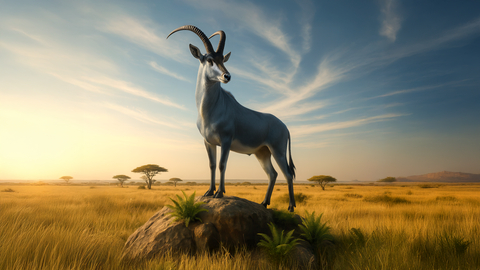
The bluebuck (Hippotragus leucophaeus)
The bluebuck joins Colossal’s ongoing work on the woolly mammoth, dodo, thylacine, moa, and dire wolf, and responds to a growing antelope endangerment crisis. According to the International Union for Conservation of Nature (IUCN), 29 of the world’s 90 antelope species are currently threatened with extinction, and populations are declining in 62% of all antelope species.
“The bluebuck represents a pivotal step forward for Colossal and conservation, marking our first major focus on antelope conservation—one we can now pursue because of major developments with the necessary technologies,” said Ben Lamm, Co-Founder and CEO of Colossal Biosciences. “Every reproductive technology, genome editing protocol, and conservation tool we develop through this effort is designed to scale—directly benefiting the 29 antelope species currently at risk.”
Underway since 2024, the bluebuck effort has already produced several scientific firsts:
- Paleogenome: A 40-fold high-coverage genome assembled from a historical bluebuck specimen — one of the highest-quality paleogenomes ever produced for an extinct species, published in Current Biology
- Induced pluripotent stem cells (iPSCs): The world’s first iPSCs generated from roan antelope, one of the bluebuck’s closest living relatives and genomic reference species
- Ovum pick-up (OPU): The world’s first successful OPU procedures in two antelope species — the roan antelope and scimitar-horned oryx — opening a direct pathway from biobanked genetics to living animals
- Global biobanking: A BioVault initiative led by the Colossal Foundation, prioritizing genetic material from threatened antelope species across Africa
Colossal has partnered with the Endangered Wildlife Trust (EWT), one of southern Africa’s most respected conservation organizations, on ecological planning and stakeholder engagement, and with Advanced Conservation Strategies (ACS), led by conservation ecologist Dr. Josh Donlan, on a comprehensive feasibility study covering potential reintroduction sites, population viability, and regulatory pathways.
“African antelopes have long been neglected in global conservation,” said Dr. Beth Shapiro, Chief Science Officer at Colossal Biosciences. “We’re bringing back a species that played a vital role in its ecosystem, and building the scientific foundation for antelope conservation before more of its relatives are lost.”
For more information on the bluebuck de-extinction effort and Colossal’s broader portfolio, visit www.colossal.com.
About Colossal Biosciences
Colossal was founded by emerging technology and software entrepreneur Ben Lamm and world-renowned geneticist and serial biotech entrepreneur George Church, Ph.D., and is the first to apply CRISPR technology for the purposes of species de-extinction. Colossal creates innovative technologies for species restoration, critically endangered species protection, and the repopulation of critical ecosystems that support the continuation of life on Earth. For more information, visit www.colossal.com.
View source version on businesswire.com: https://www.businesswire.com/news/home/20260430086473/en/
Media gallery