
Key Takeaways
- A sound door that opens easily with only a part or two broken can often be repaired, while a door caving in under its own weight usually needs full replacement
- Rot and moisture damage near the bottom panels of old wood doors often point to deeper structural weakness that repairs alone cannot fix
- Since July 1, 2019, California law requires every replacement garage door opener to include a working battery backup, with penalties up to $1,000 per opener for noncompliance
- A Quality Garage Door explains that choosing between steel, wood-look, and real wood comes down to upkeep versus appearance, a tradeoff worth weighing before any purchase – find more expert insights below
A garage door rarely fails all at once. It usually sends warning signs first: a panel that looks a little rougher each season, a noise that was not there before, a door that seems to hesitate halfway up.
For homeowners, deciding whether to repair or replace that door means looking honestly at its condition, comparing materials, and making sure any new opener meets California’s safety rules. Getting this right protects both the household budget and the people walking in and out of that garage every day.
Is Your Garage Door Safe to Keep?
Before comparing new doors or pricing out materials, the first real question is simpler: can the current door still be trusted to operate safely? A door that goes up and down without much effort and has only a broken spring, cable, or hinge is often a strong repair candidate. A door that sags, groans, or looks like it is caving in under its own weight is sending a different message entirely, and that message is usually replacement.
Safety has to come before cost here. A broken garage door should never be used, and a repair should never be attempted unless it leaves the door fully safe to operate.
Repair or Replace: Seven Questions to Ask First
Making the repair-versus-replace decision well means working through a short checklist rather than guessing. Consider the current condition of the door, the type of damage causing the problem, the door’s age, which parts need fixing or swapping, the condition of the opener, the household budget, and whether the door can be made safe to use again. Weighing all seven together, rather than focusing on just one, usually points to the right answer.
Signs the Door Is Caving In, Not Just Worn
There is a real difference between a door that looks tired and one that is structurally failing. Peeling paint or a little rust is cosmetic wear. A door buckling inward, sections pulling apart from the frame, or visible gaps opening between panels are structural warnings that the door’s basic strength is gone. Once a door reaches that point, patch repairs tend to be short-term fixes at best.
Why an Unsafe Repair Is No Repair at All
A repair that gets the door moving again but leaves it unsafe does not count as a repair. If fixing one part still leaves the door imbalanced, hard to control, or likely to fail again soon, replacement is the more honest answer. This standard matters most with garage doors because of their weight and the force involved when something goes wrong mid-cycle.
When Old Wood Doors Signal Replacement
Wood garage doors age differently than steel ones, and homeowners with older wood doors often reach a replacement decision sooner than they expect. The classic warm look of a wood sectional door comes with a tradeoff: wood breaks down steadily from moisture, sun, and daily use, even in a relatively mild Southern California climate.
Rot, Sagging, and Rough Operation to Watch For
A handful of signs tend to show up together on an aging wood door:
- Rotted wood along the bottom section
- Cracked or split panels
- Peeling paint or raw, exposed wood
- Water staining near the lower edges
- Sections separating from the frame
- Sagging or bending while the door opens
- Loud or rough operation
- Visible gaps between panels
- Frequent repairs to hinges, rollers, springs, or the opener
Any one of these alone might be a minor fix. Several appearing together usually means the door’s structure is compromised rather than just its appearance.
How Driveway Runoff and Sun Exposure Cause Decay
Wood doors take the brunt of their damage at the bottom, where they sit closest to the ground. Driveway runoff, sprinkler overspray, and general moisture collect there first, and once paint or sealant wears thin, water works its way into the wood itself. Strong sun exposure adds to the problem by drying and splitting panels from the outside while moisture does its damage from below. Over years, this combination turns a once-solid wood door into one with soft spots and weakened joints that patchwork repairs cannot fully reverse.
Why a Weak Section Strains Springs and Openers
A rotted or cracked wood section does more than look bad. Wood that absorbs moisture gets heavier, throwing off the door’s balance and putting extra strain on the springs that are supposed to support its weight evenly. An opener built to lift a properly balanced door suddenly has to work harder to move one that drags or hangs unevenly, which wears down the motor, gears, and rail system faster than normal.
Homeowners often blame the opener for these symptoms when the real culprit is the aging wood door behind it. There is also a practical sourcing problem: older wood door sections may no longer be available, and even if one is found, it may not match the original in size, thickness, or weight, which can throw off the door’s balance all over again.
Matching Materials to Your Garage’s Needs
According to Fullerton experts at A Quality Garage Door, once the decision leans toward replacement, material choice becomes the next major consideration. The right material depends less on personal taste alone and more on how much upkeep a homeowner wants to take on and how the garage itself gets used.
Steel and Wood-Look Doors vs. Real Wood Upkeep
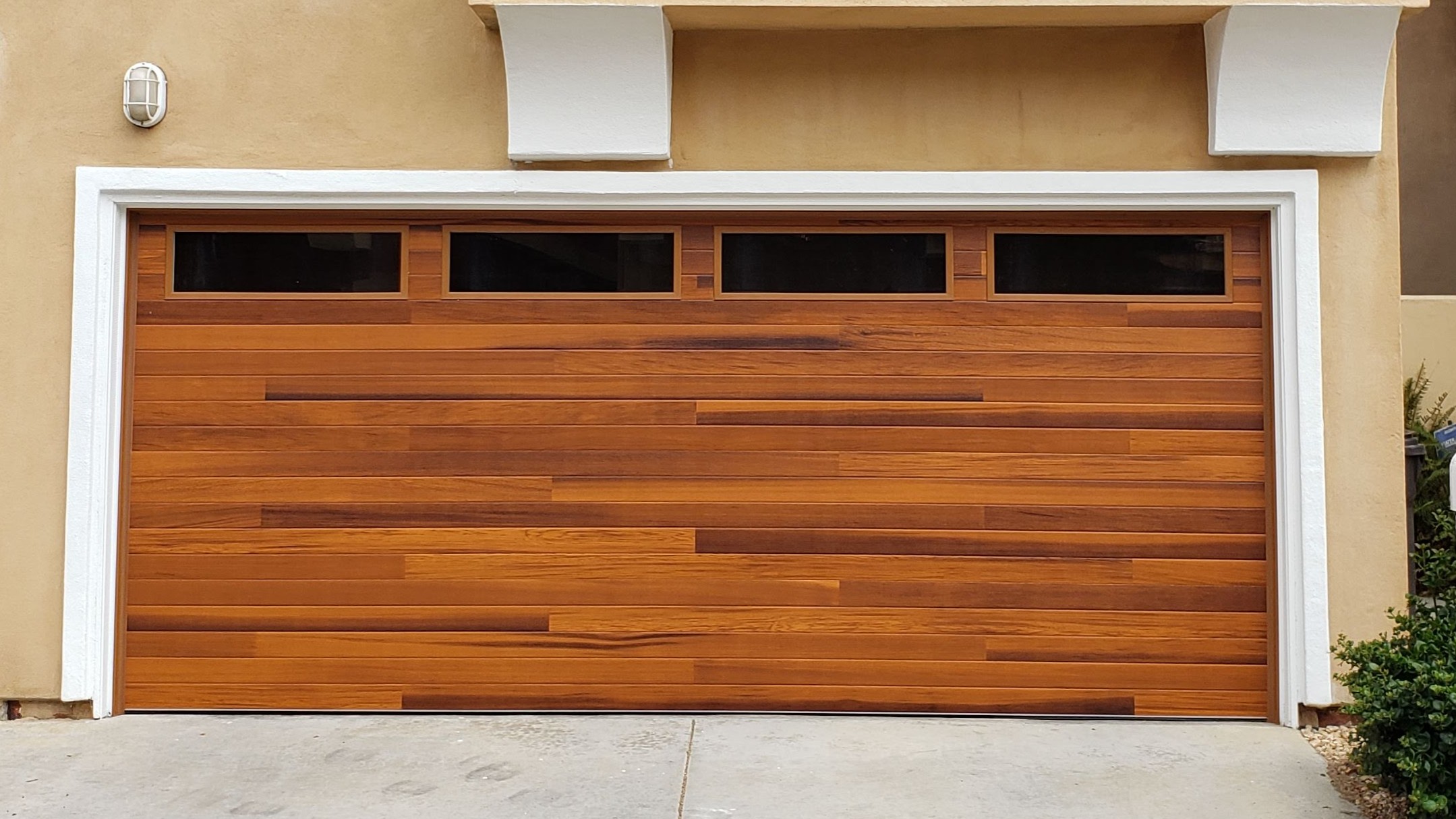
Real wood doors need regular painting, sealing, and ongoing protection from moisture to avoid the rot problems described above. Modern steel doors, including wood-look styles that mimic the grain and paneling of real wood, can deliver a similar curb-appeal payoff with far less maintenance. For homeowners who want the classic look without the repeated upkeep, a wood-look steel door is often the more practical long-term choice, while those committed to authentic wood should plan for ongoing sealing and painting as part of ownership.
Don’t Forget the Opener’s Battery Backup
Material and insulation choices matter for comfort and curb appeal, but one requirement is not optional: the opener’s battery backup. This is where a straightforward home-improvement decision intersects with California state law.
California’s Rule for Replacement Doors and Openers
Under California Health and Safety Code 19892, part of SB 969, every garage door opener sold or installed in the state since July 1, 2019 must include a battery backup function. A replacement door cannot legally be connected to an opener that lacks one. This applies broadly to residential use, including residential applications of openers originally built for commercial purposes. Skipping this requirement is not a minor paperwork issue: Health and Safety Code 19891 sets the penalty at $1,000 per opener.
The law traces back to the 2017 wildfires. An Assembly committee analysis tied to the legislation noted that at least five people reportedly died because they couldn’t drive their cars out of garages during power outages tied to those fires. That history is part of why the requirement carries real weight rather than functioning as a bureaucratic afterthought.
Why Backup Power Matters During Outages
Power outages are not a hypothetical concern in Southern California. In January 2025, Southern California Edison shut off power to 363,196 customers across eight counties, including Orange, Riverside, and San Bernardino, according to a CPUC post-event report. Both SCE’s June 2026 newsletter and CAL FIRE’s evacuation guide advise residents to learn how to open a garage door manually without power, which highlights how often this situation comes up during wind events and planned shutoffs.
A battery backup means the opener keeps working through an outage instead of leaving a homeowner stuck using the manual release in the dark. LiftMaster’s owner’s manual recommends testing the backup battery every year and considering replacement as it ages, since even a working backup loses capacity over time. Anyone replacing a door and opener together should confirm the new system includes this feature from the start, since it will already be required by law.
Weighing Condition, Materials, and Compliance Together
None of these factors- condition, material, insulation, or compliance- work well in isolation. A door that is structurally sound but missing some insulation calls for a different decision than one that is rotted and uninsulated. A homeowner replacing a door purely for curb appeal still needs to confirm the opener meets the battery-backup rule, since that requirement applies to the installation regardless of why the project started.
Taking stock of all four factors together, rather than fixating on just the most visible one, leads to a door that holds up structurally, fits the way the garage gets used, and meets the safety standard the state expects. For homeowners ready to move from evaluation to action, A Quality Garage Door has more resources, walking readers through garage door replacement decisions grounded in condition, material fit, and opener compliance.
A Quality Garage Door
info@aqualitygaragedoor.com
+17145237900
2500 West Orangethorpe Avenue
Suite 120
Fullerton
CA
92833
United States


