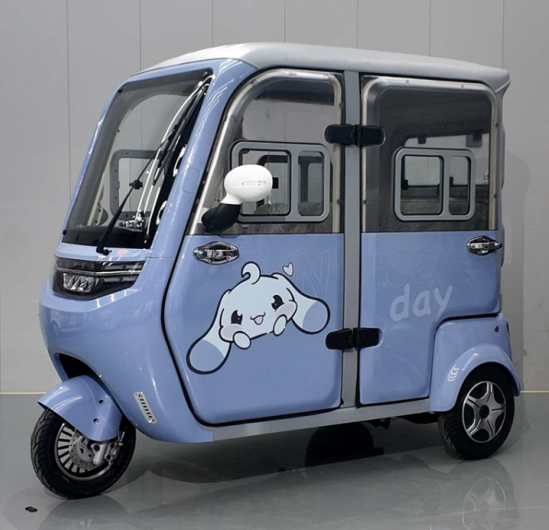
WUGONG, TIANJIN, CHINA, October 29, 2026 /EINPresswire.com/ — A Global leading safe and durable Electric tricycle Manufacturer must address more than the transition from conventional fuel to electric power. Vehicle safety, structural durability, ease of operation and suitability for different transportation needs are equally important. Aiweda develops electric mobility products for personal travel, leisure, passenger transportation and cargo handling, reflecting the growing demand for practical solutions for short-distance mobility. By offering different vehicle configurations and investing in manufacturing capabilities, Aiweda is contributing to the development of electric transportation for both individual users and commercial applications.
Electric tricycles have become a relevant option in urban and community transportation because they can accommodate a range of everyday tasks. They may support local commuting, neighborhood deliveries and passenger transport, depending on their design and local operating regulations. Compared with conventional fuel-powered vehicles, electric models produce no tailpipe emissions during operation. Their overall environmental benefits, however, also depend on electricity sources, battery production, maintenance and product lifespan.
As demand for more accessible and efficient mobility grows, manufacturers must balance practical performance with reliability and responsible product development. These priorities provide an important context for Aiweda’s electric vehicle portfolio.
Aiweda’s Approach to Safe and Durable Vehicle Manufacturing
Aiweda integrates research and development, manufacturing, sales and service within its electric mobility business. Its manufacturing operations incorporate processes such as metal stamping, laser cutting, robotic welding, electroplating and paint baking. These processes support structural fabrication, component assembly and surface finishing, all of which influence the consistency and durability of finished vehicles.
For electric tricycles, frame construction is particularly important because the structure must support the vehicle, rider and any permitted cargo. Motor and controller compatibility also affects power delivery and operating performance. A vehicle intended for personal transportation may require different characteristics from one designed for frequent deliveries or passenger use.
Aiweda’s product range includes models featuring reinforced steel frames for load-bearing applications. Appropriate material selection and manufacturing quality can help improve structural reliability, while long-term performance also depends on engineering, corrosion protection, operating conditions and regular maintenance.
Safety likewise requires a system-level approach. Braking performance, steering response, tire condition, load distribution and vehicle stability all influence everyday operation. Buyers should assess these characteristics against the intended application rather than assuming that one specification applies across an entire product range.
Electric Tricycles for Personal and Commercial Applications
Aiweda offers electric tricycles alongside electric scooters, electric motorcycles, folding mobility vehicles, sightseeing vehicles and electric four-wheelers. This broader portfolio reflects the different ways electric mobility can support daily transportation.
Personal Mobility and Leisure Travel
For short-distance journeys, electric tricycles can provide an alternative to conventional two-wheel vehicles. Their configurations may appeal to users seeking practical transportation for local errands, neighborhood travel and leisure activities.
Aiweda’s range includes leisure-oriented models and mobility products designed with accessibility and convenience in mind. Folding models also address storage and portability requirements, which can be relevant for users with limited space. The suitability of each vehicle depends on its dimensions, operating controls, riding environment and individual mobility needs.
For older adults, ease of entry, comfortable seating and straightforward operation can be important considerations. Nevertheless, a three-wheel layout does not automatically guarantee stability under every condition. Speed management, turning technique, road surface and compliance with the manufacturer’s operating instructions remain essential to safe use.
Passenger Transportation and Local Deliveries
Electric tricycles can also support small-scale commercial transportation. Passenger-oriented configurations may serve local transport needs, while cargo models can carry goods and supplies over relatively short distances.
For retailers, service providers and local delivery operators, electric cargo vehicles may offer operational flexibility in areas where trips are frequent and destinations are close together. Their practical value depends on carrying capacity, available charging facilities, route conditions and the cost of maintaining the vehicle throughout its service life.
Aiweda’s passenger and cargo vehicle offerings address these different requirements through varied product configurations. Selecting an appropriate model requires checking its rated payload, braking system, battery specifications and intended operating environment. These details help ensure that a vehicle is matched to its actual workload rather than used beyond its designed capabilities.
Research and Development for Evolving Mobility Needs
Electric vehicle development increasingly combines mechanical engineering with electronic control and user-oriented technology. Motors, controllers and electrical systems must work together to deliver predictable operation, while new control technologies may provide additional options for improving accessibility.
Aiweda’s research and development activities include work on customizable intelligent functions, including voice-control and unmanned-driving technologies for selected three-wheel and four-wheel vehicle applications. Such development reflects an interest in exploring how emerging technologies could support future mobility requirements.
However, intelligent mobility features must be evaluated according to their actual implementation and validation. Their effectiveness depends on the operating environment, system reliability, user interface and relevant safety requirements. Continued development in this area is therefore best understood as part of the industry’s broader technological evolution.
Manufacturing Capabilities and International Market Requirements
Serving different markets requires manufacturers to consider more than production capacity. Vehicle regulations, road conditions, consumer expectations and maintenance arrangements vary between countries, influencing product selection and market suitability.
Aiweda has developed international business activities in markets including South Korea, Thailand, Brazil and Mexico. Its manufacturing and export experience provides a commercial foundation for serving different mobility requirements, although specific vehicle configurations must still meet the applicable local regulations.
After-sales assistance is another important consideration for distributors and fleet operators. Access to technical guidance, maintenance information and replacement components can affect vehicle uptime and the total cost of ownership. Clear product specifications also help buyers compare available models and determine whether their performance characteristics suit the intended application.
For manufacturers expanding across international markets, consistent production quality and effective technical communication can be as important as the initial vehicle design. These factors help support the long-term use of electric mobility products in different operating environments.
Aiweda and the Future of Green Mobility
The development of electric transportation is closely connected to efforts to improve urban air quality, reduce dependence on fossil fuels and provide more efficient options for short-distance travel. Electric tricycles can contribute to these goals when they replace suitable conventional journeys and are supported by responsible battery management and appropriate charging infrastructure.
At the same time, the sector faces practical challenges. Battery performance, charging access, vehicle durability, road safety and local regulations all influence adoption. Manufacturers must therefore consider the complete operating experience rather than focusing exclusively on electrification.
Aiweda’s combination of personal mobility products, cargo-oriented vehicles, folding models and intelligent-system development reflects the varied requirements of the electric tricycle market. Its manufacturing capabilities support this product diversity, while attention to structural design, component compatibility and application-specific requirements remains central to developing dependable transportation solutions.
As green mobility continues to evolve, the long-term relevance of electric tricycles will depend on how effectively manufacturers align product design with real-world needs. Aiweda’s work across different electric vehicle categories forms part of this ongoing shift toward practical, adaptable and lower-emission transportation.
Further information about Aiweda’s products and mobility solutions is available at official website: https://www.aiweidaescooter.com/.
Tianjin Aiweda Technology Co., Ltd.
Tianjin Aiweda Technology Co., Ltd.
Legal Disclaimer:
EIN Presswire provides this news content “as is” without warranty of any kind. We do not accept any responsibility or liability
for the accuracy, content, images, videos, licenses, completeness, legality, or reliability of the information contained in this
article. If you have any complaints or copyright issues related to this article, kindly contact the author above.

Media gallery